
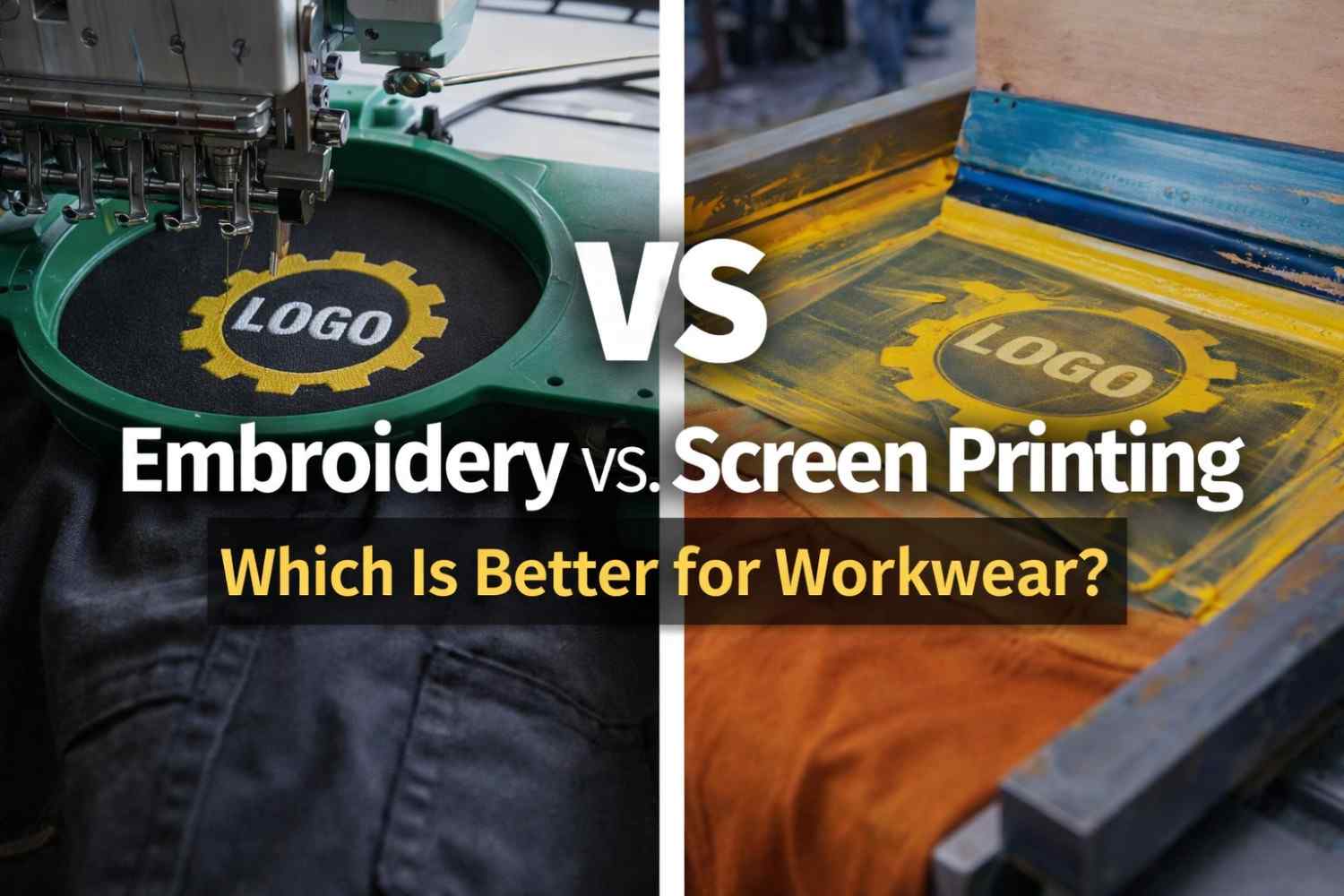
Explore Embroidery vs. Screen Printing: Which Is Better for Workwear in Canada?
Choosing the right decoration method matters for workwear. Your logo shows your brand every day. Poor-quality printing fades quickly and erodes trust.
Many Canadian businesses ask one key question. Embroidery vs. screen printing: which is better for workwear?
This guide explains everything in simple terms.
You will learn durability, cost, comfort, and the best use cases. By the end, you will know the best option for your team.
Understanding Embroidery vs. Screen Printing for Workwear
Workwear faces rough conditions. Canadian weather adds more pressure. Cold, heat, washing, and daily use test your uniforms.
Embroidery and screen printing both work well. Each method serves different needs. The right choice depends on fabric, logo style, and job type.
Let us break this down step by step.
What Is Embroidery in Workwear Branding?
Embroidery uses thread to stitch your logo into fabric. Machines sew the design directly onto the garment. This method adds texture and depth.
Embroidery works best on thick fabrics. Jackets, hoodies, polos, and uniforms handle stitching well. The logo feels premium and professional.
Canadian construction and corporate teams often choose embroidery. It survives tough use and frequent washing.
Benefits of Embroidery for Workwear
Embroidery lasts a long time. Threads resist fading and peeling. Logos stay sharp for years.
Embroidery also looks professional. Raised stitching gives a strong brand image. Many managers prefer this style for supervisors and corporate staff.
Embroidery handles cold weather clothing well. Jackets and fleece maintain logo quality through winter wear.
Limitations of Embroidery on Workwear
Embroidery costs more than printing. Complex logos increase stitch count and price.
Embroidery feels heavier on thin fabrics. T-shirts and lightweight apparel may feel stiff.
Small details sometimes lose clarity. Very fine text may not stitch cleanly.
What Is Screen Printing for Workwear Apparel?
Screen printing uses ink pressed through a mesh screen. Each color applies separately. The ink bonds with fabric fibers.
Screen printing works best for large designs. T-shirts, hi-vis shirts, and uniforms handle printing well.
Many Canadian businesses choose screen printing for bulk orders. It stays cost-effective at scale.
Benefits of Screen Printing for Workwear
Screen printing costs less for large quantities. Bulk orders reduce per-unit price.
Printing supports bold colors. Logos stay bright and eye-catching. Safety apparel benefits from high contrast.
Screen printing feels lighter on fabric. Workers enjoy better comfort during long shifts.
Limitations of Screen Printing on Workwear
Printed designs fade over time. Frequent washing reduces brightness.
Ink may crack on heavy fabrics. Jackets and thick hoodies may not perform well.
Screen printing struggles with small batch orders. Setup costs increase for short runs.
Embroidery vs. Screen Printing: Durability Comparison
Durability matters most for workwear. Construction, logistics, and industrial jobs demand strength.
Embroidery wins in durability. Stitched logos survive washing, friction, and weather. Canadian winters do not damage embroidery.
Screen printing performs well but fades gradually. Proper care extends life, but wear still shows over time.
For long-term uniforms, embroidery delivers better value.
Embroidery vs. Screen Printing: Cost Comparison
Cost plays a big role in decision-making. Budget planning matters for growing teams.
Screen printing costs less for large orders. Simple designs reduce setup expense.
Embroidery costs more per piece. The price reflects durability and a premium appearance.
For entry-level staff or seasonal teams, screen printing saves money. For management uniforms, embroidery justifies the cost.
Embroidery vs. Screen Printing: Comfort and Fabric Feel
Comfort affects worker productivity. Heavy logos can annoy workers.
Screen printing feels lighter. Ink sits flat and moves with the fabric.
Embroidery adds weight. Thick stitching may feel warm but stiff.
For summer uniforms and active jobs, printing improves comfort. For outerwear, embroidery works well.
Best Choice for Different Types of Workwear
Different garments need different methods. One solution does not fit all.
Best Method for Jackets and Hoodies
Embroidery works best for jackets and hoodies. Thick fabric supports stitching. Logos look clean and professional.
You can learn more about choosing winter gear here:
👉 How to Choose the Best Construction Jacket for Canadian Winters
Best Method for Hi-Vis and Safety Workwear
Screen printing works well for hi-vis clothing. Bright colors stay visible and clear.
Compliance matters in Canada. Learn safety standards here:
👉 What Is CSA Z96 Compliance for Hi-Vis Workwear
Best Method for Corporate and Office Workwear
Embroidery suits corporate apparel. Polos and uniforms look professional and premium.
Executives and supervisors often prefer stitched logos for brand authority.
Embroidery vs. Screen Printing for Branding Impact
Your logo represents your company. First impressions matter.
Embroidery signals quality and trust. Clients associate it with established brands.
Screen printing creates bold visibility. Large logos grab attention on job sites.
Many Canadian companies mix both methods. They use embroidery for jackets and printing for shirts.
Which Method Is Better for Canadian Businesses?
Canadian weather influences workwear decisions. Cold winters and rough environments need durability.
Embroidery performs better in cold conditions. Stitching holds firm under layers.
Screen printing works well for indoor or summer teams. Breathability matters during warmer months.
Your business type should guide the choice.
How to Choose the Right Option for Your Team
Start by asking simple questions.
What garment do you need?
How long will workers wear it?
What is your budget?
Then consider branding goals. Do you want premium image or mass visibility?
Finally, think about durability. Replacement costs add up over time.
Why Professional Custom Workwear Matters
Quality workwear improves team pride. Workers feel valued and professional.
Branded uniforms also boost brand recognition. Every job site becomes marketing.
Professional decoration methods protect your investment. Cheap printing leads to reorders.
Get Custom Workwear That Matches Your Needs
Choosing the right method saves money long-term. Expert guidance makes the process easier.
YourKit.pro provides custom embroidery and screen printing for Canadian businesses. The team helps you select the best option for each garment.
Explore services here:
👉 Custom Workwear Solutions
👉 View Products
👉 Ecommerce Apparel Services
You can also learn about printing techniques from an independent source:
👉 Screen Printing – Wikipedia
This reference explains the technical process in detail.
Frequently Asked Questions (FAQs)
Is embroidery better than screen printing for workwear?
Embroidery offers better durability. Screen printing offers better cost efficiency for large orders.
Which lasts longer on uniforms?
Embroidery lasts longer under heavy use and frequent washing.
Is screen printing good for construction shirts?
Yes, screen printing works well for shirts and hi-vis clothing.
Can businesses use both methods together?
Yes, many companies mix embroidery and printing for different garments.
Which method works best in Canadian winters?
Embroidery performs better on jackets and winter workwear.
Conclusion
Embroidery and screen printing both serve workwear needs. The right choice depends on fabric, use, and budget.
Embroidery suits jackets, hoodies, and corporate uniforms. Screen printing works best for shirts and safety apparel.
Canadian businesses benefit from using both methods strategically. Smart choices improve durability, comfort, and branding.
If you want workwear that lasts and represents your brand well, choose the method that fits your team’s real needs.
